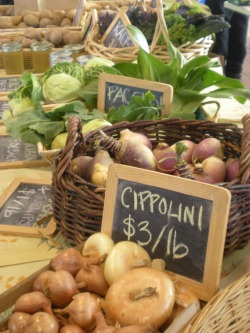
Wednesday, March 16, 2011

True Irish Food Traditions


As the world turns with its tragedies, I found this quote from a Wisconsin good food advocate helpful in considering continuing on in light of emotional, social, and political turmoil... "Our job as advocates for a sustainable food system is to stay the course, even in the face of the tremendous political upheaval that is facing our beloved state."--REAP Founder, Jack Kloppenberg    So on with it.

As folks around the country prepare to celebrate St Patrick’s Day with corned beef, cabbage, and green beer, I can’t help thinking that this is a rather impoverished version of Irish Food Heritage.  It would be much like limiting our American food traditions to meat and potatoes...or French fries and soda....

Until recently though, this too was my perception of Irish food: I looked to my Sicilian heritage for  any culinary cultural inspiration.  When I was growing up, my non-Irish mother would honor my father’s full-Irish heritage by making corned beef and cabbage with potatoes and soda bread each year for St Patrick’s Day.  I did enjoy it at the time certainly, but as I got older,and my thoughts about food evolved (i.e.; I became a snobby vegetarian cook for many years,) I began to suffer from a misconception that many suffer from: that Irish cuisine is dull, heavy, starchy, fatty, salty, unhealthy, unimaginative…basically, something to be avoided.   

What it took me a while to realize is that this misconception was a result of many social, historic, and economic happenings colliding to thin out the rich culinary history of the Green Isle.  This history is far too complex to review in this blogpost, but I’d like to take special note here of the Great Famine (Potato Famines) because this exemplifies the importance of food biodiversity so well.  The potato (a food of South American origins) was introduced to Ireland in the 16th century and only became important when English and Anglo aristocracy reduced land allotments so drastically that the native Gaelic Irish peasantry could only survive by dedicating their small growing spaces to the nutrient dense potato.  When potato blight swept through several years in a row, people were left with little else to eat, but the by-then all too scare wild foods. Over 1 million died. And many, many more emigrated.

But. Irish cuisine has been experiencing a renaissance (much like we are here in the US) of its own beautiful and varied food traditions.  People like Darina Allen of the Ballymaloe Cookery School, and Slow Food Ireland, are stalwarts of good traditional Irish Food Heritage and Farm to Table Cookery. The foods of the Ireland have evolved over thousands of years and incorporate a rich blend of agricultural and hunter-gatherer traditions.  Wild foods dominated the Celtic diet for eons, but agriculture took root over 5,000 years.  The result: a wide variety of healthy and sustainable food ways co-existed until political winds changed and then industrial food systems superceded

A mini list of Traditional Irish ingredients includes: seafood & fish like cockles, smoked haddock, salmon, periwinkles, trout, oysters; fruit and nuts like hazelnuts, blackberries, rowanberries, apples; honey; cultivated vegetables like turnips, parsnips, leeks, potatoes, rutabaga, cabbage, kale, artichokes; wild foods like mushrooms, nettles, asparagus, sorrel, samphire, dulse, carrageen moss; grains and legumes like split peas, oats, barley, rye, wheat; game such as venison, pheasant, goose, wild pig; livestock like lamb, pork (bacon, sausage, pudding) and beef; Raw Milk Cheeses like Cheddars, Mileens, Cashel Blue, Gubbeen; whiskeys and good beer...and on.... This list puts me in mind of Wisconsin and its mix of wild and cultivated foods from woodland, water, and pasture. 

To celebrate St Patrick’s holiday at my weekly cooking class, we made a smoked fish soup (recipe below) of mostly local ingredients, but alongside homemade Brown (Whole Wheat) Soda Bread, it reminded us of a land that gave us such lovely food and art and poetry...  "The world is full of magic things, patiently waiting for our senses to grow sharper." — W.B. Yeats

Happy Saint Patrick's Day!

Green Isle Soup                                                  

    * 2 onions, diced
    * 2 carrots, diced
    * 1 large potato, diced
    * 1 turnip, diced
    * 1 small head cabbage, diced
    * 1 tablespoons butter
    * ~ 1 lb smoked fish (such as haddock or trout)
    * 1 bay leaf
    * 2 cloves garlic
    * 6 cups of water or fish stock
    * 1 tablespoon fresh thyme or 1 teaspoon dried
    * 1 bunch parsley, chopped
    * ½ cup half n half
    * ¼ teaspoon grated nutmeg

Melt the vegetables in butter. Add fish and other ingredients except the last three.

Simmer until the vegetables and fish are cooked. Remove the bones from the fish and return the flesh to the soup.

Discard the bay leaf and finish with the nutmeg, half n half, and parsley.  Serve with brown soda bread.

Tuesday, March 8, 2011

Local Farmer Open House

This Saturday, you, your family, and friends, can learn about Local Food & Community Supported Agriculture from area farmers, chefs, and various local foodies at the Local Farmer Open House at the Urban Ecology Center.  To spread the word,  I asked my friend, the fabulous farmer-philosopher David Koslowski of Pinehold Gardens, to talk to the Fox 6 morning team about the upcoming open house for Get Active Today's "March is Nutrition Month" segment.  Why?  Because buying local food supports the health of people and places, as well as our community and the local economy (at a time when these things are sorely in need of everyone's support.)   We can make a blanket statement about local food being nutritious, because not only does it tend to be fresher than what you find in supermarket shelves it also primarily exists on the "little to no processing end" of the processed food spectrum (as opposed to the gallons of uber-hyper-super-processed foods we consume laden with added salts, sugars, and fats, with little of the original sustenance remaining.)  Check out Dave's spot here for a taste of what fun you can expect this Saturday at one of Milwaukee's treasure's, the UEC.
 

Wednesday, February 23, 2011

WI Budget Repair Bill Bad for Our Health

I don't normally explore politics on this blog in quite this fashion..but the historic events going on in my home state of Wisconsin right now demand attention.

Not only could Governor Scott Walker's Budget Repair Bill undermine our communities’ socio-economic vitality by eliminating most public workers’ bargaining rights, reducing pay, and putting our public schools at risk, but our state public health programs could be effectively destroyed. 

Because the bill would give the Walker administration power to gut funding to public health programs administered through the Department of Health Services our health programs for the impoverished—essential services our seniors, children, and farmers rely on—could be cut without any input from the legislature.  I spoke with a nurse colleague of mine today who expressed concerns that our SeniorCare and BadgerCare programs could be slashed.  “Immunization programs, free clinics, medication assistance for seniors, well women’s programs....they’re all at risk.”

This is why so many of my friends and colleagues have joined the tens of thousands protestors around the capital and here in Milwaukee as well.  There are so many ways we can raise our voices against the dissolution of citizen rights.  You can read the bill here and then take (or continue to take) action....you could start with something as simple as this: Join the Wisconsin Wave.

Thursday, February 3, 2011

New Dietary Guidelines for Americans: Eat Less Junk


When I told someone recently that the new 2010 Dietary Guidelines for Americans (DGAs) were finally published this week (!) she responded with something like, "So? People are just gonna go on eating what they're gonna eat."  Oh ye of little faith...  Regardless of the fact that people are ultimately responsible for what they put in their mouth, and knowing full well that the DGAs are created by the same body (USDA) that regulates the food industry, these guidelines are important because they help form the basis for nutrition policy in Federal food, nutrition, education, and information programs--think school lunch & SNAP--and can create tidal waves in the food industry.

At first glance, the 2010 DGAs have not changed much from the 2005 edition, but the changes made are significant.  Firstly, these guidelines were not published, as per usual, as guidance for “healthy” Americans, because they then would not be applicable to the majority of the population due to the epidemic of lifestyle related chronic disease.  These guidelines were published for an unhealthy population.  The document starts off by describing the state of the nation’s health, and though these statistics are well known, they are startling:  almost 50% of adults over the age of 20 have type 2 diabetes or pre-diabetes, heart disease is rampant with 37% of the population having cardiovascular disease, overweight and obesity affects the majority of adults and a large minority of children, and health disparities abound.  In light of these troubling facts, the new DGAs encourage people to consume fewer calories in general, less of them from junk food:

Focus on consuming nutrient-dense foods and beverages. Americans currently consume too much sodium and too many calories from solid fats, added sugars, and refined grains.2 These replace nutrient-dense foods and beverages and make it difficult for people to achieve recommended nutrient intake while controlling calorie and sodium intake. A healthy eating pattern limits intake of sodium, solid fats, added sugars, and refined grains and emphasizes nutrient-dense foods and bever­ages—vegetables, fruits, whole grains, fat-free or low-fat milk and milk products,3 seafood, lean meats and poultry, eggs, beans and peas, and nuts and seeds.
That's pretty solid nutrition advice.

These DGAs also address the food environment, exploring the Socio-Ecological Model of Health —there is a whole chapter dedicated to encouraging all sectors of society to work together to improve American’s food intake and activity patterns.  One recommendation I enjoyed; "Develop and expand safe, effective, and sustainable agriculture and aquaculture practices to ensure availability of recommended amounts of healthy foods to all segments of the population."  The elephant in the room here though seems to be the missing recommendation to stop our current subsidy system; which creates the overabundant supply of cheap SoFAS.  But, the fact that the DGAs seriously consider the food environment, means we can probably expect more funds trickling down to community driven, good food programs.

There’s a lot we could go into, and I will explore more of the details, wading through particular food groups in future postings, but for now, suffice it to say that the DGAs do remain very industry friendly.  One doesn’t expect to find issues such as resource depletion, food sovereignty, food justice, ecology, or traditional foodways seriouusly considered in the DGAs...but I somehow found myself hoping for it nonetheless.  (When the USDA is charged with promoting the meat and dairy industries, how can we expect them to come right out and tell people to eat less CAFO beef or acknowledge the water pollution of large dairy operations or even that much of the American population is actually lactose intolerant???)

So while the DGAs do not really address questions of sustainability, if all American’s switched their diet to one patterned off these rec’s, we’d actually reduce our ecological footprint markedly from where it now stands while improving our health drastically.  

Tuesday, January 25, 2011

Just What are You Eating?


I do love this graphic of "What the Average American Consumes in a Year" by Visual Economics. The bad news (no surprises  really, though startling to be sure) is that, on average, we're eating 110 lbs red meat, 192.3 lbs. of flour and cereal products, 141.6 lbs. of caloric sweeteners, including 42 lbs. of corn syrup, 29 lbs. of French fries, 23 lbs. of pizza and 24 lbs. of ice cream, 53 gallons of soda each year, averaging about one gallon each week, and 2.736 lbs. of sodium.  But I was pleased to see we eat 415.4 lbs. of vegetables and 273.2 lbs. of fruit each year, on average. Though I suspect that potatoes (in the form of french fries and chips?) account for the vast majority of the veg intake--they usually do in food frequency questionnaires.  Bottom-line is we're eating way too much of highly processed, carbon-intensive foods, and not enough of the whole foods that have been keep humans healthy for ages.

I thought of this graphic this morning after I talked about food labels with Kim Murphy on Fox 6 for Get Active Today (you can watch below.)  Its an important food literacy issue simply because Americans eat so much processed food these days.  While surveys show that many people look at food labels, they don't show that people really "get" them, and my encounters with clients confirms for me that most people don't understand them well, and therefore don't really know just what they are putting in their mouths.  Confusing the issue can be the front of the label health claims....remember these claims ("3 grams fiber!" or "No cholesterol!") may or may not be relevant to the foods overall nutrient value. Reading the ingredient list and the nutrient facts label can help you sort out a packaged food's true nutrition nature.

Whole or minimally processed foods, like fruits, vegetables, whole grains, beans. fish, dairy, nuts, pastured meats, eggs, and so on, are naturally nutrient dense in their original (or close to original)  states.  My advice is to choose plenty of these foods and learn to understand food labels. You can go to Get Active Today for a helpful handout on label reading.


Tuesday, January 4, 2011

What is on the plate for 2011?


Will Americans get ever closer to a McDonalds or have more access to fresh, local, healthy food in 2011?
The turn of the year always makes me curious for what the next 365 days will hold…. 
Nitrogen Contaminated Water 

Of course, we can expect more of the same problems to unfold: because we can suppose that Americans will continue to watch almost as much television as a full-time occupation (~35 hours each week) and will each drink over 50 gallons of sweetened beverages on average this year—we can expect that public health problems like obesity, heart disease, and type 2 diabetes will continue to grow.  And along with many other nasty habits, because our growing population continues to choose a highly carbon intensive diet; high in industrialized meat and highly processed foods sold in highly processed packages—we will continue to raise the level of carbon in the atmosphere while it’s already at dangerous levels.  And because American farmers will apply so many pesticides and spread so much nitrogen on their fields this year, we can expect to see the dead zone in the Gulf of Mexico expand even further, watch more fresh ground water become undrinkable due to nitrogen levels, and continue to put ag bees and wildlife at risk.  Another 27,000 species will likely be lost from our planet this year…with much of the loss due to agriculture.
Milwaukee Farmer's Market
But we can also anticipate more of the positives that make up the burgeoning food movement—farmers markets and the organic sector will continue to expand, as markets grew in number by 16% last year and the organic sector has grown by ~20% in each of the past several.  The increases in small scale, sustainable ag support will allow more farmers to grow more produce and to raise animals on pasture and so we’ll have access to healthier foods.  More young people will learn about food traditions and how to cook, garden, farm (this last one we’ll have to cross our fingers that more people will someday get into farming than are getting out of it) through the increasing number of programs like school gardens, college curricula, and farm internships.  Work will continue to ensure that endangered foods; like the Narragansett Turkey, Milwaukee Apple, Lake Michigan Whitefish, and Beaver Dam Pepper remain.
Will Zebra Mussels taste
anything like these
Sicilian beauties?
And we’ll likely see more innovative solutions come out of the woodwork and into the mainstream—like the invasive species diet .  Maybe this idea can be simply defined as eating invasive species so that the pressure of their invasion is reduced.  Here in Wisconsin friends and I have enjoyed delicious concoctions like invasive garlic mustard pestos, but what I really wonder about is zebra mussels—will someone find a way to harvest & eat those mollusks that are taking over Lake Michigan?  A Spanish marine biologist I met at the Salone del Gusto is successfully marketing invasive yet deliciously edible seaweed along his coast.  And a big question for the world of eco-minded nutrition professionals—will the soon to be released, USDA's 2010 Dietary Guidelines for American’s finally address sustainability???
No matter what else happens this year, the more agroecology, nutritional ecology, food biodiversity, traditional foodways, and just plain old kitchen wisdom we invest in, the more we will improve our environmental and collective health…what we put on or plates will help to shape the things to come.

Tuesday, December 21, 2010

Solstice Sustenance


Sicilian alter of light....
The winter solstice marks the shortest day & longest night of the year...it is a time to consider our relationship to the sun and all of the energy its light provides; light energy that makes possible life on earth.  

Though today is also the first calendar day of winter, we've been in full snow mode for quite a while here in the upper Midwest.  Its times like these when our food traditions just seem to make both poetic and actual sense--our bodies crave the nourishing hearty greens, root vegetables, winter squash, and other "good keepers" like apples, onions, shallots, and so on that have graced larders for centuries.  All those foods that have undergone the remarkable process of storing up the sun's energy so that we can be fed.

Having recently returned from Terra Madre, Slow Food's international meeting in Italy, I was fortunate to learn about many different countries food traditions.  Here in the Great Lakes region, winter fruit and veg are part of our food heritage and the joy of eating in place. As a cook and a dietitian, I encourage people to eat their veggies all year round...not just because  they are good for us, but because they taste divine.  Earlier this morning I visited the Wake Up team on Fox 6 for Get Active Today to share some of my favorite seasonal produce recipes to celebrate the season.  You can watch the clip below and get the recipes here.

Friday, December 10, 2010

Happy Terra Madre Day 2010

From a letter to Slow Food WiSE chapter contacts:

Terra Madre Day, December 10th, is the day the worldwide Slow Food community has set aside to celebrate our connections to the land; terra madre; mother earth. This is a day to reflect on our relationships to food and community and on ways we can deepen these relationships.

This October, I was honored to attend Terra Madre—Slow Food’s biennial meeting in Turin, Italy. From our own food community, Larry and Sharon Adams of Walnut Way, and myself, a dietitian and good food advocate, joined the more than 6,000 delegates, from over 150 countries. Small producers, chefs, farmers, fishers, educators, and activists, came together to connect, share stories, and strengthen their voices through the collective, international work. Over sixty meetings and workshops took place at Terra Madre, exploring subjects such as Food Policy, Sustainable Education, Healthy Food in Schools, Eco-Friendly Farming, Fair Trade, Agro-biodiversity, Food Sovereignty, Hunger & Poverty, Slow Fish, Cooks & Places, the Youth Food Movement, and so much more. The experience was, in short, amazing.

I ran into other Wisconsinites, such as Chef Dan Fox of the Madison Club, and Joe Sabol of Sabol Family Farm, in the bustling halls of Terra Madre. And while next door at the Salone del Gusto, an incredible exposition hall of place-based foods from around the world, I was delighted to find a larger than life picture of my friend and past delegate, Martha Davis Kipcak, former Slow Food WiSE chapter leader, current Slow Food Regional Governor, and food activist, along with a prescient quote, “To act locally means to know your community and be a part of it.” This led me to think about other past delegates from our community—chef Dave Swanson of Braise, urban farmer Will Allen of Growing Power, farmer Jeff Preder of Jeff-Leen Farms, farmer Katie Bjorkman of Earth Harvest Farm, and student (at the time) Lianna Bishop, now of Slow Food WiSE & Center for Resilient Cities. All people devoted to creating a good, clean, and fair food system, here and beyond.

Terra Madre is not just a simple meeting or conference. It is a network of people from around the globe working together to create a united voice in support of transforming the way we eat. “Food is life. Food is us,” said an Ethiopian elder at the Opening Ceremony. On this Terra Madre day, if not every day, we can take time to remember this concept because food is life. Happy Terra Madre Day to you and yours!

If you’d like to talk about Terra Madre, food traditions, or biodiversity, please contact me at jcasey@slowfoodwise.org.

Peace,
Jennifer Casey

Read more about Terra Madre.

Monday, November 22, 2010

In Gratitude


The world wide web is a flurry of Thanksgiving articles and blog posts.  I have added my own to the throng with a healthy, local food themed piece on Get Active Today’s website, replete with recipes made with ingredients sourced at the winter farmer’s market.

This year, I’ve noted that the many people harping on the gluttony and over consumption that can often be involved in American holidays has ratcheted up a notch; some have gone so far as to boycott Thanksgiving.  That seems a shame.  I like to think that this is one holiday where we can truly, easily, observe and celebrate our eternal connection to the land.  To give thanks for the many things that make the act of eating together possible is something I feel we should do more often.   So while many feel this holiday has gone too far (and really, its easy to agree when you consider the average Thanksgiving meal holds more than double our daily calorie needs) I think the answer is not to banish it, but to bring it back down to its earthly origin.

While Thanksgiving is an American holiday (and though we get the origin story of the original Thanksgiving wrong over and over again) giving thanks for a good harvest is something all cultures have done for the millennia. More generally speaking, gratitude is something that all cultures, all religions express, and nowadays science has shown us that gratitude is associated with well-being.

So in this spirit of gratitude I reflect on what I am thankful for this year:  I’m thankful for the birds and the bees and all the pollinators of our fruit trees and plants, the farmers who’ve worked on bent knee and with sore backs to cultivate food from the soil for my table, the little garden that could still flush with herbs in my yard, the great diversity of lifeforms around the globe, the clean water that flows out of my tap from the fresh water reservoir that is Lake Michigan, and for the people I love both near and far that nourish my soul...

Wednesday, November 3, 2010

Reflections on Terra Madre 2010


Having just returned from Terra Madre, Slow Food’s international conference in Torino, Italy, I find myself in awe of and inspired by the beautiful people I met from around the world—sustainable farmers and fishers, food producers, chefs, educators and activists working towards a food system that is good, clean, and fair. For everyone. Thousands of people from over 150 countries came together to share their stories. At the Opening Ceremony an Ethiopian man said, “Food is life. Food is us.” This seemed to me to sum up the spirit of Terra Madre. The practice of Terra Madre is found in the continuing use of traditional knowledge about food, land and sea stewardship to guide our way forward.

To some, this may sound obvious. To others, it may seem naive, unrealistic. But this is not pure rhetoric. In moving towards an industrialized, anonymous food system over the last several decades, we have lost our close connection to food and land and with great consequences. We are besieged by the problems of global warming, hunger, chronic disease, pollution, resource depletion, loss of biodiversity, and the marked injustices faced by people on both ends of the spectrum—eaters and producers alike. The further away we’ve removed ourselves from the source of our food, from knowing and understanding our food, the worse things have become. A Guarani man from Brazil put it like this, “The world is sick.” But, he went on to say, “There are other ways. The world can and must change.”

Terra Madre stands for change through recognizing our roots—seeking innovative solutions to modern problems through the collective wisdom of our tried and true foodways. Those sane traditions that have kept people and places happy, healthy, and whole for generations; practices like sustainable fishing, ecologically sound farming, gardening, seed saving, cooking, and preserving can tie together the past and the future. Corporate interests would like us to believe that they have the key to feeding the world, but while they may have a monopoly, big ag can never feed the world in a way that fosters true health of people and places. We need the diversity of our worldwide communities instead of “putting all of our eggs in one basket.” The one size fits all mentality found in the practices of industrial ag’s GMOs, monocrops, and seed patenting only compounds the problems we face.

Over sixty meetings and workshops took place at Terra Madre, exploring subjects such as Food Policy, Sustainable Education, Healthy Food in Schools, Eco-Friendly Farming, Fair Trade, Agro-biodiversity, Food Sovereignty, Hunger & Poverty, Slow Fish, Cooks & Places, the Youth Food Movement, and so much more. One of the most exciting workshops I attended was a global meeting of indigenous people working together to create the Terra Madre Indigenous People Network. The TMIP Network will host their first meeting in 2011 to form a united voice, strong enough to take to the United Nations and to be heard around the world. “We have a lot to tell the world,” one woman explained. She affirmed what Carlo Petrini, founder of Slow Food, had said at the Opening Ceremony, “Keepers of traditional knowledge; natives, farmers, women, elderly….should be listened to.”

Next door to Terra Madre was the Salone del Gusto –a vast artisanal food marketplace and exposition of food producers that embody the principles of Slow Food. Here, delegates from Terra Madre, and thousands of other visitors were able to taste food and drink from Europe, Asia, Africa, the America's and beyond. Raw milk cheeses, fruit preserves, cured meats, pastries, breads, dates, wild rice, legumes and beans, nut pestos and pastes, wine, spirits, seaweed, seafood, fermented foods, and much, much more were on display.  Foods especially in danger of extinction were highlighted through Slow Food's Presidia projects. (In the USA we have only a few Presidia, including wild rice or Manoomin, but the Ark of Taste, a catalogue of more than 200 foods, works along these same lines of preserving biodiversity.) The Salone helped me to truly understand the concept of terroir-- the unique flavors that come from the soil, geography, weather, of where a food was produced. One cheesemaker said to me, “I want you to taste my land.” And I did.

After the conference was over, I had an opportunity to explore a bit of my own cultural food heritage. Taking the train down to Sicily, I was able to find my grandmother’s birthplace. A small mountain village overlooking the sea with terraced groves of olives and citrus dotted with figs, persimmons, grapes, prickly pears, wild mint, fennel, hens, and sheep. In Sicily I tasted the sea in the anchovy, sardine, octopus, squid, eel, swordfish, and jackfish that the small fisherman had brought to the fish market that morning. I tasted the land in the olive oil, sheep’s milk cheeses, almonds, pistachios, tomatoes, eggplants, peppers, beans, strawberries, grapes, olives, and vino. It was lovely. And the people of Sicily seemed warm and welcoming and truly happy. My friend said of the fishermen at the market, “they seemed the happiest people on the planet.” Imagine, living in close concert with your surroundings, living in balance, and finding pleasure… In my travels throughout Italy I witnessed people eating together. In homes, cafes, street-scapes, restaurants, markets I saw people enjoying each other’s company.

I left Italy at first with some reluctance, but in the end, returned with a renewed passion for seeking out the terroir of my home: the wild rice, winter squash, raw milk cheeses, hickory nuts, apples, organic oats in my pantry, the wild asparagus that will shoot up next spring, and the berries that will follow, the lake fish, the wild game. All places have foods worth celebrating. It is our job as humans to ensure that this food diversity remains. So, as my Sicilian grandmother would say, “Mangiare, mangiare!” Jc

Tuesday, October 19, 2010

Slow Food on Fox!


In this morning's interview on Fox 6, as a Get Active Today advisory board member, I got a chance to talk about Slow Food. I will indeed be traveling to Terra Madre (Slow Food's international conference in Italy) tomorrow to meet, share with and learn from farmers, producers, chefs, educators, activists, and youth dedicated to a sustainable food system. Learn more at slowfoodwise.org, terramadre.info, and getactivetoday.com. I will be certain to share upon my return...ciao!

Wednesday, September 1, 2010

Eat Local Challenge 2010


The Eat Local Challenge begins today in Milwaukee--everywhere, people will be seeking out their local farms, markets, gardens, and restaurants for sustenance. To celebrate this fourth year of an increasingly successful challenge, I thought I'd share some local food menu ideas I put together for the 2007 challenge...people are always asking me for menu suggestions.  Also, you can scroll down to watch yesterday's television spot on Fox 6 where I try to make some connections between eating locally and eating healthfully...

Eat Local Challenge Menu Suggestions
September in Southeastern Wisconsin presents us with the opportunity to choose from a wide array of beautiful locally grown & made foods. The harvest is in full swing & so it becomes easier than one might expect to “eat local”. I’ve compiled some menu ideas to help celebrate the season in a nutritionally balanced way (i.e.; not eating solely tomatoes for a week). Suggested foods range from home-grown to locally-produced and rely heavily upon our local farmers’ bounty. There are a few ideas for those who want to go “100% local” as well as for those who are interested in exploring the idea, but are constrained by time or taste.
Just the main ingredients are listed; the seasonings & techniques are up to you. I’ve assumed use of butter over oil (unless you decide to purchase Wisconsin made pumpkin seed oil or use what’s already in your pantry) and creative use of brightly flavored dairy products like plain yogurt, blue cheeses, sour cream over vinegars & lemons (unless you can find locally made apple cider vinegar), along with heaps of fresh herbs to provide the major flavors. I’ve included some sourcing information at the end. This is in no way a comprehensive list, but one to build upon. Enjoy the challenge…
                                                                                   - Jennifer Casey, Sep 2007
 
Breakfast
Omelet with Feta Cheese, Tomatoes, & Herbs
Breakfast Red Potatoes
Sliced Watermelon
Milk

Whole Grain Toast with Butter (Apple, Maple, or Cream Butter)
Yogurt sweetened with Maple Syrup
McIntosh Apple
Fair trade, Locally roasted Coffee with Honey & Cream

Locally baked Breakfast Pastry
Homemade Crepes stuffed with Ricotta & Sautéed Pears
Sparkling Apple Wine

Apple Pancakes
Sliced Cantaloupe
Cornmeal-Apple Porridge
Yogurt, Plum, & Granola Parfait

Lunch
Simple Soyman Burger on Whole Grain Bun with Arugula & Tomato
Potato & Scallion Salad

Pita pockets spread with Herb Cream Cheese & stuffed with Sprouts & Bell Pepper
Sliced Carrots & Apple
Yogurt

Chicken & Wild Rice Salad with Broiled Fennel
Grilled Cheddar Cheese & Heirloom Tomato-Basil Sandwich
Mixed Green Salad

Egg Salad & sliced Cucumber Sandwich
Watercress Salad

Toasted Summer Sausage, Button Mushroom, & Gruyere Sandwich
Spinach Salad

Cauliflower Asiago Quiche
Tomato, Basil, Fresh Mozzarella Salad

Dinner
Grass-fed Beef Filet topped with Caramelized Onions
Mashed Potatoes with Rosemary
Sautéed Swiss Chard
Apple Pie
Stone’s Throw Pinot Noir

Creamy Polenta topped with Tomato-Garlic Salad
Pan-seared Chicken wit Thyme & Garlic
Sautéed Onions, Bell Peppers, & Fennel
Honeyed Melon with Mascarpone

Chicken Bratwurst
Sweet Corn
Grilled Zucchini & Eggplant
Blue Cheese & Chive Potato Salad
New Glarus Fat Squirrel Ale

Roasted Butternut Squash or Pumpkin with Sage
Wild “Fried” Rice with Eggs & Scallions
Fresh Shelled Pinto Beans & Green Beans

Pan-seared Brown Trout
Roasted Root Vegetables (Beets, Sweet Potatoes, Red Potatoes, &/or Parsnips)
Green Salad with Goat Chevre & Shaved Fennel

Selection of Wisconsin Cheeses
Wild Grapes, Apples, Pears, &/or Ever Bearing Strawberries
Baked Garlic
Potter’s Crackers

Farmers’ Market Soup
possibly made of
Onions, Celery, Carrots, Garlic,
Potatoes, Tomatoes, Swiss Chard, & Herbs


Sunday, August 29, 2010

ocean's decline


When a friend recently told me about a new report out showing that phytoplankton, the source of much of the world's oxygen and which stands at the very base of much of the planet's food chain, has declined by forty percent since 1950, I was shocked.  Jaw droppingly shocked.  Oh my.  This is big news.  Phytoplankton makes the world go around. The reason for the decline, scientists say, is global warming.  You can read about the research in this Nature news piece,  "Ocean greenery under warming stress, A century of phytoplankton decline suggests that ocean ecosystems are in peril."

(Closer to home we've seen what happens when plankton is depleted.  When invasive zebra mussels depleted Lake Michigan's plankton supply, native perch, much beloved for its starring role in Friday fish fries, drastically declined.  Local outdoors writer, Paul Smith, wrote about the 90% reduction in Lake Michigan perch in less than twenty years in this Journal Sentinel article.)

This phytoplankton research adds to what we already know about the precarious state of sea life. Earlier this summer, we learned about the massive worldwide decline of the much beloved, warm blooded, blue fin tuna population in an epic New York Times Magazine piece by Paul Greenberg titled "Tuna's End."   Blue fin tuna is one among many species that are over-fished world wide.  Pair that with suboptimal ocean habitat, due to ocean acidification and ruination of breeding grounds due to industrial fishing practices and pollution, and we can expect to soon see the end of the "Age of Tuna."  Many groups are calling for a complete moratorium on blue fin tuna fishing.

What's an eater to do?  Of course we know the health benefits of seafood, especially those with flesh rich in omega 3 fatty acids, such as wild salmon and tuna.  (It's interesting to me to note that within the sea-food-chain, the omega 3's in fish originate in phytoplankton.)  I explored this issue back in 2008 in the blogpost "Finding Sustainable Seafood."  That post identifies some options for non-marine sources of dietary omega-3s and includes a link to a sustainable seafood selector tool.  Here's another great resource:

Quick Tips from the Sustainable Seafood Guide on the NRDC website.
Eat lower on the food chain
Buy American
Buy wild
Eat local
Buy from trusted retailers
Ask where your fish came from
Look for the blue, Marine Stewardship Council sticker


Sustainable Nutrition Bottom-line:  Obviously, global warming must be halted if we hope to allay the very worst effects of ocean acidification and species decline.  As eaters, we can choose to follow a low-carbon diet and to think carefully about our seafood choices.  We do have power in the food choices we make everyday.  Our appetites shape the world.

Saturday, July 31, 2010

Procuring Nourishment


A trip to the farmer's market this morning, and an afternoon spent in the garden yesterday, left me musing about the procurement of food. The word procure, comes from the Latin term procurare, meanings, "to take care of."  Pro = for + cura = care.  Just how much care do we, en masse, spend in obtaining our food?

Farmer's market shoppers with reusable bags brimming with gorgeous produce aside, I see evidence all around of just how little time, thought, or care goes into to how, why, and when people get something to fill their bellies or quench their thirst.  The good food movement is on the upswing, but most Americans remain out of touch with the source of their nourishment.

Once upon a time humans spent a great deal of time and care feeding themselves.  Now we leave it up to a small handful of very powerful food corporations (which bring us factory made burgers and industrial grade sweeteners) to do it for us.  In the neighborhood in which I work, as I walk to our health center's community garden plot, I find garbage cans and sidewalks littered with fast food wrappers and empty sweetened beverage containers and people guzzling high fructose corn syrup like it's going out of style.  Not to point fingers.  Federal policies and corporate campaigns have led to these easily obtainable, cheap, processed foodstuffs.  Each convenience store and gas station I walk past proudly announces they accept food stamps inside.  Peering down the aisles of these stores, I find little that would qualify as healthy options.  You know this scene.

Ironically, or maybe tragically, only two farmer's markets in the Milwaukee metro area currently accept food stamps.  There does exist the Farmer's Market Nutrition Program for seniors and WIC participants, but the elders I know who signed up for the SFMNP came home with a $25 coupon for the season.  Twenty five dollars won't get people their recommended daily servings of vegetables for an entire season, maybe not even an entire week.  Why is it, I keep asking myself, do we subsidize cheap food on the agricultural level with corn and soybean subsidies?  (see Gov Ag Policies and Obesity.)  Wouldn't the sane thing to do, from a public health perspective, be to make it as easy as possible for all people to get the foods that help to prevent and control obesity, diabetes, heart disease, and such?

Bottomline: The change we so drastically need to make in our food system can't just come from the top down in the shape of smarter food assistance & subsidy policies; it must come from individuals and communities as well.  This is why local groups such as the Victory Garden Initiative, Growing Power, Walnut Way, and even our little Circle Garden project are so important--because it is these initiatives that teach people to be more self sufficient by growing nutritious food...to take more care in finding something to eat.

Tuesday, July 6, 2010

Gov Ag Policies and Obesity


Just what do government agricultural policies have to do with obesity? 
It seems, to me, a short jump from current government ag subsidies to our toxic, obesogenic and diabetogenic food environment.  If we are what we eat and we eat what’s available and what’s available is what we grow a lot of (read: subsidized corn and soy) and what’s not available is a lot of whole plant foods (read: unsubsidized vegetables) then we end up eating a lot of the easily accessible, cheap, processed junk.  But we know this. 
Maybe the thing to ask ourselves is, “why are we eating a lot of cheap junk?”  Is it because we are human and born with a sweet tooth and are wired to eat whenever able?  I think so. Yes. In part.  Eating past our current caloric needs is evolutionarily ingrained.  It wasn’t until very recently in history when humans had more than enough to eat.  “Feasting” was protective for the once commonplace times of “famine”.   We can blame it on our genes.  But not completely.  Because the genes for problems like Type 2 Diabetes and Obesity are really only expressed when the environment promotes it.  It also wasn’t until very recently in human history that we had twin epidemics of diabetes and obesity.  Take home point: when we flood the market with consumable junk, we consume it. 
In light of this dynamic, I found it interesting to read, on the same day, one article about how the USDA has agreed that a soda tax would help combat obesity, and another article about how the USDA is entrenched in subsidies (which prompt cheap soda.)
In the American Prospect article “Slowed Food Revolution” author Heather Rodgers does a great job explaining why organic/sustainable food costs more, why small farmers aren’t able to make a living, and exploring why our policy makers in Washington are opposed to change.
One of the salient points she makes is that the USDA is trying to support organic while not altering support for industrialed ag.  This climate makes it impossible for the small organic farmer, in part because it interferes with the real costs of food to show up at supermarkets.   Without changing the way the USDA treats industrialized ag, artificially cheap food (propped up by subsidies and other support mechanisms) will continue to be cheap at the market while small farmers can barely keep their land, let alone pay themselves a decent wage.
If the USDA agrees that a “sin tax” on soda would result in a significant decline in obesity, why would they continue to, literally, subsidize it?
The average American child and adolescent gets 10-15% of their total calorie intake from beverages.  With more than a third of our children overweight or obese this is a major problem requiring a significant shift in policy and perspective...
The upcoming 2012 Farm Bill is the major battleground in which these issues will be fought over.  Many have argued the name changed to Food Bill because it is the primary instrument of the government to shape national food policy (think school lunch, food stamps, subsidies and so on.)   Changing the Farm Bill to include real food policies will make a difference for real people.
Sustainable Nutrition Bottom-line:  The vast majority of government support for ag in this country is geared toward big time, industrialized operations.  To review: subsidized corn and soy is turned into the vast quantities of processed foods and feed lot animal products that line our supermarket shelves.    What if we instead supported sound ag practices?  Like growing fruits and vegetables.  And pasturing animals.  Then supermarkets aisles might not be so crowded with cheap junk.  And the nations’ eaters might not be so sick.